


Article summary
This guide breaks down the Apple foldable iPhone launch timeline based on latest rumors and prediction-market odds. Learn what the market is pricing for a September 2026 debut, expected design and specs, pricing comparisons, and the factors that could trigger a delay.
Apple is expected to launch its first foldable iPhone in September 2026—a book-style device (folds horizontally like a book, opening to ~8-9 inches) with an estimated price of $2,000–$2,500. As of July 29, 2026, prediction markets price 72% odds of a launch by September 30, 2026, meaning traders believe it’s likely but not certain. The remaining 28% probability reflects real risks: manufacturing delays on the display hinge (notoriously difficult to mass-produce), potential durability issues discovered during testing, or Apple’s strategic decision to wait for market clarity. If Apple launches on schedule, it will be priced as a premium tier above the iPhone 18 Pro Max ($1,199), making it Apple’s most expensive iPhone ever. The foldable is expected to feature a “zero-crease” display (a key improvement over Samsung’s Galaxy Z Fold), the A20 processor (2nm chip), and heavy iOS optimization for the larger open display. This guide explains what prediction markets are pricing for a September launch, why 28% of traders expect delays, expected specs and pricing, and what could trigger either outcome.
What Is the Apple Foldable iPhone Market?
The prediction-market question is straightforward: Will Apple launch a foldable iPhone (in any market) by September 30, 2026?
“Launch” typically means:
- Apple officially announces the device
- Apple accepts pre-orders or begins sales
- The device becomes available for purchase in at least one major market (US, China, EU)
A launch does not require global availability. If Apple releases the foldable iPhone in the US but delays international rollout, the market resolves to “Yes.”
The resolution deadline is September 30, 2026. If Apple announces a September launch event but ships the device in October, that likely triggers a “No” resolution (depending on exact market rules—always check the specific market’s resolution criteria on Polymarket or Kalshi).
Current Prediction-Market Odds
As of July 29, 2026:
- Polymarket: 72% probability of an Apple foldable iPhone launch by Sept 30, 2026
- Kalshi: Similar pricing, with active trading from both institutional and retail participants
- Trading volume: Moderate liquidity; tens of thousands of dollars traded daily on major platforms
This 72% odds represents consensus that a September launch is likely, though traders assign significant probability to delays (28% for a post-September release or cancellation).
The odds have remained relatively stable over the past few weeks, suggesting that traders view a September 2026 launch as increasingly likely—Apple has had sufficient time to manufacture inventory, and the company has not signaled major delays (as far as public reporting indicates).
What Conditions Would Trigger a “Yes” (September Launch)?
For the market to resolve to “Yes,” one of these scenarios must occur before October 1, 2026:
Apple announces the device at an event (likely September):
Apple typically holds events in September to announce new iPhones. Analysts and leakers expect the iPhone 18 Pro and iPhone 18 Pro Max to launch in September, followed by the foldable iPhone either at the same event or a separate one in September or early October.
Apple begins accepting pre-orders:
Apple could announce the foldable iPhone in September, begin pre-orders, and start shipping in October. Depending on market rules, this might trigger a “Yes” resolution if the announcement and pre-order period fall before September 30.
Apple achieves manufacturing readiness:
For a September launch to happen, Apple needs:
- Final design locked in (likely already done as of late July)
- Manufacturing yield high enough to produce initial inventory (7-8 million units expected in H2 2026)
- Component supply chains secured (display, hinges, processors)
- Software (iOS integration) finalized
As of July 2026, reports suggest these pieces are in place.
No catastrophic delays emerge:
The biggest risk is a manufacturing bottleneck in the display hinge mechanism (a common foldable-phone failure point) or a surprise competitive threat. As long as these don’t emerge, September remains achievable.
What Conditions Would Trigger a “No” (October or Later)?
The market resolves to “No” if the foldable iPhone does not launch by September 30, 2026. This could happen due to:
Manufacturing delays:
Foldable displays and hinge mechanisms are notoriously difficult to produce at scale. If yields drop below acceptable levels, or if suppliers cannot deliver components fast enough, Apple could push launch to Q4 2026 or early 2027.
Competitive pressure or market timing:
Apple might decide to wait until October to build anticipation, compete with Galaxy Z Fold 8 launches, or coordinate with iOS 19 release. The company has delayed products for strategic reasons before.
Design refinements:
If Apple’s testing uncovers durability concerns (crease visibility, hinge longevity, display issues), the company could postpone to ensure quality meets its standards.
Geopolitical or supply-chain disruptions:
Escalating US-China tensions, sanctions, or shipping disruptions could slow component supply.
Apple’s strategic choice:
Apple might decide foldables are not ready for mass adoption and delay indefinitely. This is a lower-probability scenario given the company’s public hints about foldable development, but it remains possible.
What Do We Know About the Foldable iPhone’s Design?
Unlike speculation, here’s what analysts and leakers have consistently reported:
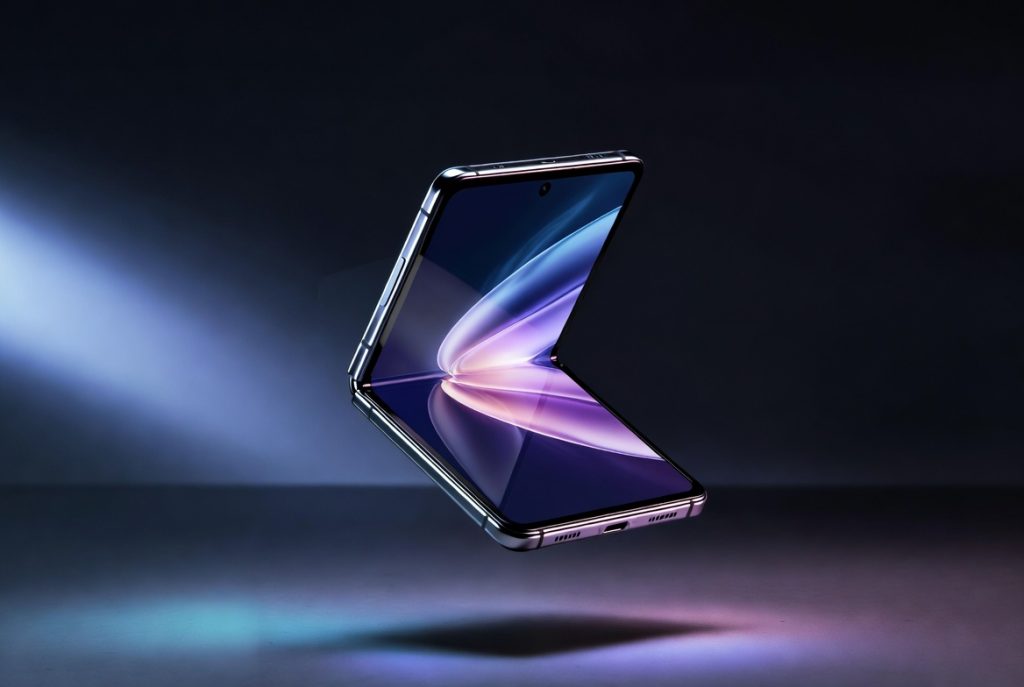
Form factor: Book-style (horizontal fold)
The iPhone will fold horizontally like a book, opening to a larger display. This differs from Samsung’s Galaxy Z Fold, which also folds horizontally but with a different aspect ratio. Apple’s design is expected to open to a display closer to an iPad mini’s size (around 8 inches), rather than a traditional tablet.
When closed, the device will have an outer display (similar to current iPhone size) and camera for selfies and quick use. When opened, the inner display reveals the expanded screen.
Estimated dimensions:
- Closed: Approximately 6 inches (similar to iPhone 15 width)
- Open: Approximately 8–9 inches diagonal
This makes it more compact than Samsung’s Galaxy Z Fold when closed, and more tablet-like when open—a key differentiator Apple is expected to emphasize.
Display technology: “Zero-crease” OLED
One of Apple’s rumored innovations is reducing the visibility of the fold crease. Samsung’s Galaxy Z Fold displays show a visible crease where the hinge bends the screen. Apple is reportedly developing a “zero-crease” or near-invisible hinge technology using a new hinge design and display optimization.
This is a major selling point, as the crease is one of the most criticized aspects of current foldables.
Processing power: A20 chip (2nm architecture)
The foldable iPhone is expected to use the same A20 processor as the iPhone 18 Pro models. This 2nm chip represents a significant generational leap, enabling faster processing, better AI integration, and improved power efficiency.
Pricing: $2,000 and up
This is the biggest differentiator. Apple’s foldable iPhone is not expected to replace the standard iPhone 18. Instead, it will be a premium tier:
- iPhone 18 (standard): ~$799
- iPhone 18 Pro: ~$999
- iPhone 18 Pro Max: ~$1,199
- iPhone Fold / Ultra: ~$2,000–$2,500
At this price point, Apple is positioning the foldable as a luxury product for early adopters and enthusiasts, not a mass-market replacement. This high price is consistent with Apple’s strategy of maintaining premium positioning.
Durability and testing:
Apple is expected to subject the foldable iPhone to extensive durability testing—hundreds of thousands of fold cycles—to ensure the hinge lasts the typical 3-5 year iPhone lifespan. If durability testing reveals issues, Apple could delay the launch.
Related Article : Will the Fed Raise Interest Rates in September 2026? What Prediction Markets Are Pricing
Why Is Apple Launching a Foldable Now?
Several market forces are driving Apple’s decision:
Market growth: Foldable smartphones are the fastest-growing segment. IDC projects 30% year-over-year growth in foldable shipments in 2026, driven partly by Apple’s expected entry. Samsung and Google have proven market demand; Apple is capturing that demand with its own design.
Competitive pressure: Samsung’s Galaxy Z Fold 8 is improving rapidly, and Google’s Pixel Fold is gaining traction. If Apple delays further, competitors could entrench their position. Apple is acting defensively and offensively.
Supply-chain maturity: Components (foldable displays, hinges) have improved dramatically since 2022-2023. Suppliers like Samsung Display and LG can now reliably produce the parts Apple needs.
Consumer demand: Multiple surveys show interest in an Apple foldable. The combination of the Apple brand, iOS optimization, and rumored design improvements (zero-crease) has created anticipation.
Apple Foldable iPhone vs. Galaxy Z Fold 8: Comparison
| Feature | iPhone Fold (Expected) | Galaxy Z Fold 8 |
|---|---|---|
| Price | $2,000–$2,500 | $1,900–$2,100 |
| Closed size | ~6 inches | ~6.3 inches |
| Open size | ~8–9 inches | ~7.6 inches |
| Crease visibility | Minimal (zero-crease tech) | Visible |
| Hinge durability | 500k+ fold cycles (est.) | 500k+ fold cycles |
| Display tech | OLED (Apple) | AMOLED (Samsung) |
| OS | iOS | Android |
| App optimization | Heavy (Apple controls hardware & software) | Good (Google Play Store) |
| Availability | September 2026 (predicted) | Already shipping |
| Target market | Premium/early adopters | Early adopters & enthusiasts |
Key difference: Apple’s advantage is software integration (iOS designed for foldables) and the zero-crease display. Samsung’s advantage is mature supply chains and existing market presence.
What Could Delay or Cancel the Foldable iPhone?
Prediction-market traders assign 28% probability to a post-September launch. Here are the realistic triggers:
1. Hinge or display durability issues (High risk)
If Apple’s testing finds that the hinge fails before acceptable durability thresholds, or if the display develops dead pixels, delamination, or crease-visibility issues, Apple will delay. The company’s brand relies on quality, and a faulty foldable could damage its reputation.
2. Manufacturing yield problems (Moderate risk)
Foldable displays are notoriously difficult to manufacture. If yields drop below 70–80%, Apple could face component shortages. Suppliers would need to ramp up, potentially delaying the launch by weeks or months.
3. Component supply constraints (Moderate risk)
If a key supplier (display, hinge, or processor) experiences disruptions, Apple could lack inventory for a September launch. US-China tensions could exacerbate supply-chain stress.
4. Competing product launches (Low risk)
If Samsung or Google announce a breakthrough foldable design in August 2026, Apple might delay to respond. This is unlikely but possible.
5. Software integration challenges (Low risk)
iOS optimization for foldables is complex. If Apple finds unexpected software bugs or UI issues, it could push the launch. However, the company has had months to develop iOS support, so this risk is low.
6. Strategic decision to wait (Low risk)
Apple might decide the market isn’t ready, or prefer to launch in 2027 with a more mature ecosystem. This would surprise the market and crater prediction-market odds.
Market Implications: Why This Matters Beyond Apple
Impact on the foldable smartphone market:
Apple’s entry legitimizes foldables for mainstream consumers. Current foldable shipments are around 20 million units annually. With Apple’s brand power, the market could grow to 30–50 million units within 2–3 years, capturing 5–10% of total smartphone sales.
Impact on Samsung and Google:
Samsung will face pricing pressure and market-share loss. Google’s Pixel Fold will benefit from iOS refugees but loses some differentiation. Both will need to innovate faster.
Impact on component suppliers:
Display manufacturers and hinge suppliers will see demand surge. This benefits companies like Samsung Display, LG, and Corning.
Stock market implications:
Apple stock could see upside if the launch is successful and demand exceeds expectations. Conversely, a major delay could disappoint investors expecting a new growth driver.
How to Trade the Foldable iPhone Launch Market
If you are considering betting on this market:
1. Check market rules and availability:
Polymarket and Kalshi both host foldable iPhone launch markets. Rules vary slightly (e.g., what counts as a “launch,” deadline timing). Always read the full market description before trading.
2. Assess your edge:
Do you have information suggesting a September launch is more or less likely than the 72% market price implies? If you’re betting based on a leak you saw on MacRumors, the market has likely already priced it in.
3. Consider timing and liquidity:
The market has 9 weeks until the September 30 deadline. You can enter now, exit early if your view changes, or hold to resolution. Check bid-ask spreads to ensure you can execute at reasonable prices.
4. Monitor key dates:
- August 15–20, 2026: Likely Apple announcement event (market-moving)
- August 20–30, 2026: Pre-order period (market-moving)
- Early September 2026: Any last-minute supply-chain announcements
- September 16, 2026: Any final analyst updates or leaks
If Apple announces the device in August with September shipping, the market will likely spike to 95%+ odds, and you’ll struggle to exit profitably. Trade early if you’re bullish.
5. Watch for competing announcements:
If Samsung or Google unexpectedly launches a superior foldable in August, it could spook Apple buyers and lower launch odds slightly.
Common Misconceptions
Misconception 1: “A 72% probability means the launch is basically certain.”
No. 72% means it’s likely, but 28% is still a meaningful chance of delay. In betting terms, this is 2.5-to-1 odds in favor of a September launch. Real risk remains.
Misconception 2: “If I buy ‘Yes’ now and it’s delayed to October, I lose my entire bet.”
Correct. The market question is specifically “by September 30.” If Apple launches October 5, the market resolves “No,” and your “Yes” bet loses.
Misconception 3: “Prediction markets know Apple’s launch plans.”
They don’t. Markets are informed by leaks, analyst consensus, and supply-chain signals—not insider information. Apple could surprise everyone and delay for strategic reasons.
Misconception 4: “The foldable iPhone will be a runaway success.”
Uncertain. At $2,000+, it’s niche. Some analysts question whether consumers want a device that’s not quite a phone, not quite a tablet. The market needs to prove itself.
The Bottom Line
Prediction markets are pricing a 72% probability that Apple will launch a foldable iPhone by September 30, 2026. This reflects strong analyst consensus, supply-chain readiness, and Apple’s public hints about foldable development.
However, manufacturing delays, durability concerns, or strategic decisions could push the launch to Q4 2026 or early 2027. The remaining 28% probability assigned to a post-September launch is not negligible.
If you’re tracking this for personal tech planning: A September launch is probable but not guaranteed. Wait for Apple’s official announcement in August before making upgrade decisions.
If you’re considering trading: Ensure you understand the market’s resolution rules, assess whether your view differs from the 72% consensus, and monitor for pre-announcement leaks in mid-August. Liquidity is good, but fees can erode small edge.
FAQ
1. What’s the difference between “announcement” and “launch” in the prediction market?
The market typically resolves “Yes” if Apple announces the device and accepts pre-orders or begins sales by September 30. If Apple announces in September but doesn’t ship until October, it depends on exact market rules—check the specific market’s resolution criteria.
2. Will the foldable iPhone be called the “iPhone Fold”?
Unlikely. Samsung already uses “Galaxy Fold,” so Apple will probably name it “iPhone Ultra” or a variant of “iPhone 18 Pro.” Official naming won’t be confirmed until Apple’s announcement event.
3. How much will the foldable iPhone cost?
Expected price is $2,000–$2,500 for the base model, making it Apple’s most expensive iPhone ever. Some analysts predict lower variants (16GB storage) might start closer to $1,900.
4. Can I pre-order the foldable iPhone now?
No. Apple hasn’t announced the device yet. Pre-orders typically open at the announcement event (expected August or September 2026) and ship 1–4 weeks later.
5. If Apple delays the foldable iPhone to October, does the prediction market resolve to “No”?
Yes, if the market deadline is September 30. Most prediction markets for Apple launches use September 30 as the cutoff. An October launch would resolve “No.” Always check your specific market’s rules.
6. What’s the “zero-crease” technology Apple is developing?
It’s a rumored improvement to the display hinge and protective layers designed to minimize the visible crease where the screen folds. Samsung’s Galaxy Z Fold shows a visible crease; Apple’s foldable is expected to reduce this using new hinge geometry and display optimization.
7. Will the foldable iPhone replace the standard iPhone 18?
No. Apple is expected to release:
- iPhone 18 (standard, ~$799)
- iPhone 18 Pro (~$999)
- iPhone 18 Pro Max (~$1,199)
- iPhone Fold / Ultra (~$2,000+)
The foldable is a premium tier, not a replacement.
8. How quickly do prediction markets move on Apple product announcements?
Instantly. Within seconds of an Apple announcement or leak, the market price updates. If you’re betting on a September launch, avoid entering the market just before Apple’s expected announcement event, as odds will likely spike if the launch is confirmed.

 Share on