

Quick Answer
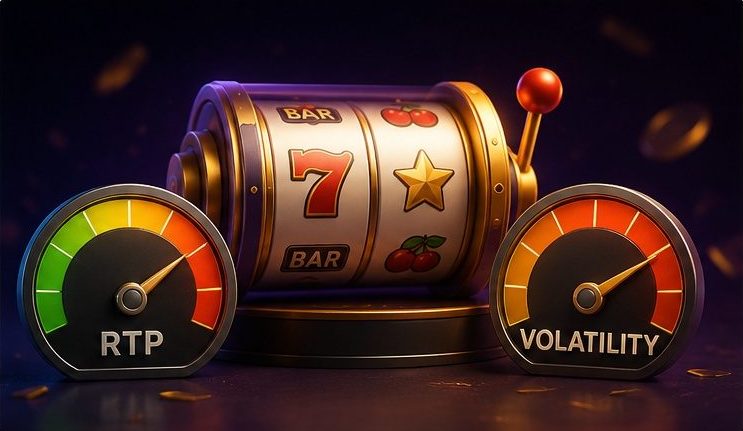
RTP, or Return to Player, is a percentage that displays the average return rate of a video slot. The RTP and volatility combine to guide the gameplay in a slot. The RTP tells you how much the game returns on average, and the volatility is how the game gets you there.
Definitions: RTP (Return to Player): a percentage representing the theoretical average return of a slot over hundreds of thousands of spins, set by the game’s math model and independently tested. Volatility (a.k.a. variance): a measure of how often and how large a slot’s wins are: low volatility = frequent, smaller wins; high volatility = rarer, larger wins; medium sits in between.
Key facts block
- RTP is expressed as a percentage (for example, an average level) and reflects long-run average behavior, not any single session.
- Volatility is usually labeled low, medium, or high (sometimes numerically, e.g., 1–5) and describes win frequency and size distribution, not the average return itself.
- A game can be high RTP and high volatility at the same time, or high RTP and low volatility: the two metrics are independent.
- The market average RTP is around average, with anything above that generally considered strong.
- Both figures are typically found on a slot’s “info” or “paytable” screen inside the game.
Key Takeaways
The RTP is a percentage that shows the average return of a video slot, statistically calculated over hundreds of thousands of spins. It’s an average for every player, not a guaranteed return of a single session.
Volatility, also known as variance, shows how the game spreads out wins. Low volatility gives regular wins, with smaller amounts. High volatility gives rarer wins, with larger amounts. Medium sits in the middle of both.
The RTP and volatility don’t connect to each other mathematically, so you can get slots with any combination of RTP and volatility.
The industry average RTP is around average, so anything above that is seen as a good level.
Volatility doesn’t equate to the quality of a game. There can be excellent games with high or low volatility. It just relates to how the game spreads out its wins.
The RTP and volatility are available through the game’s menu. Both of these are set during the game creation, so players or Sportzino can’t change them during gameplay. However, some games have built-in volatility settings, which are part of the game mechanics.
The RTP tells you the likely long-term return of a slot. The volatility gives you an idea of how you need to set your coin value to get the most from the game.
How to Understand RTP and Volatility
These are the two most searched-for terms when it comes to video slots, and there’s a reason for that. They are the most important mathematical factors when it comes to how a game will play. Our guide will cover each concept as a standalone factor, and then how they interact with each other during gameplay. We’ll also give you an idea of how you can use RTP and volatility in slots to choose the right game for you.
What Is RTP (Return to Player)?
Understanding what RTP is in slots is a simple concept once you get to grips with it. Every Sweepstakes Slots game that we offer has an RTP attached, and it’s always expressed as a percentage. It shows the average return of the slot over its lifespan, and it’s calculated through the simulation of hundreds of thousands of spins. It’s a statistical return and doesn’t guarantee a specific return from any single session.
An example, albeit on a smaller scale, could be an above-average RTP. The standard return for 100 coins would be above average over the long run. That doesn’t mean that every player will get the same amount back. If two players both played with 100 coins, it’s possible that the first player would get nothing back and the second player would get a strong return. Even though the first player got no return, the RTP would still be above average.
The RTP is set in stone when a game is released; it can’t be changed based on player wins.
Callout box (Myth-buster)
A slot is not ‘due’ for a win and doesn’t get ‘colder’ the longer you play. RTP is a long-run average across millions of spins industry-wide: it has no memory of your last 20 spins. So, there is no best time to play slots.
What Is Volatility (Variance) in Slots?
Many players wonder what volatility means in slots, as it’s not as simple to explain as RTP. Volatility is how the game feels when you play it, and it is more of an abstract concept. All Sweepstakes Casino Games have a volatility rating attached, from Jackpot Slots to Megaways Slots.
Low volatility provides wins on a more regular basis, but when they do land, they tend to be lower in value. High-volatility games make you wait longer for wins to land, but they have higher values when they do. Medium-volatility slots sit right in the middle of these two extremes. A low-volatility slot would be comparable to an hourly wage that has steady work available, while a high-volatility slot could be a commission-only sales job, which can have long dry spells, but big payouts when it hits. If you know How to Play Jackpot Slots, then you’ll understand how a high-volatility slot feels.
Not all volatility ratings are expressed as words, with some games using numbers. 1 would be the lowest volatility, and 5 would be the highest.
| Volatility Level | Win Frequency | Typical Win Size | Best Suited For |
|---|---|---|---|
| Low | Frequent | Smaller | Players who want steady, longer sessions |
| Medium | Moderate | Moderate | Players who want a balance of both |
| High | Infrequent | Larger | Players comfortable with dry spells for bigger potential wins |
RTP vs. Volatility: What’s the Real Difference?
All of the slots we offer at Sportzino come from some of the top providers on the market. Developers like NetEnt, Hacksaw Gaming, and Red Tiger are available. Each one advertises its RTP and volatility, and they always mean different things.
As already mentioned, the RTP is the return rate for the game expressed as an average percentage. Volatility is how the game returns the coins players use. It creates the feel of the game and helps to set a pattern rather than a concrete statistic.
Both RTP and volatility are independent variables, and there’s no intrinsic link between either of them. Our table below shows how different RTP and volatility types can match up, and what that means for the gameplay. Neither the RTP nor volatility tells the full story of a game, and you should check them both before trying any of our Classic Slots.
| Combination | What to Expect |
|---|---|
| High RTP + Low Volatility | Frequent, dependable, smaller wins with a strong long-run average |
| High RTP + High Volatility | Long droughts, but big win potential and a strong long-run average |
| Low RTP + Low Volatility | Frequent small wins, but a lower overall long-run average |
| Low RTP + High Volatility | Infrequent wins and a lower long-run average, generally least favorable |
How to Find and Read a Slot’s RTP and Volatility
Whether you’re playing Hold and Win Slots or any other type of slot, finding the RTP and volatility is critical. We’ve put together a step-by-step guide to help you find every metric you need to start playing.
Step 1: Open the Game’s Info or Paytable Screen
Most video slots have an “i” or hamburger menu that you can use to open the game information. You’ll need to navigate to the paytable or rules section.
Step 2: Locate the RTP Percentage
The RTP is often located on the last page of the rules and is listed as a percentage. Sometimes, it is underneath the max win value.
Step 3: Locate the Volatility Rating
The volatility will usually be on the same page as the RTP, but it can be displayed in multiple ways. The most common is low, medium, or high, but it can also appear as numbers and even a graphical visualization.
Step 4: Compare Before You Choose
Responsible Gaming & Player Safety are essential when you’re playing video slots at Sportzino. Compare what each game offers, using the table above as a clear visual guide to the RTP/volatility dynamic. Once you’ve checked, you can find the right game for you, helping to maximize your fun. #### Pro Tip callout: If two slots have similar themes but different volatility, try the lower-volatility one first if you want to play longer with a smaller coin balance, and save the higher-volatility one for when you’re chasing a bigger single win.
Does a Higher RTP Always Mean a Better Slot?
The simple answer is no. It all depends on what you want from a game, as the pure numbers don’t always tell the full story. A game could have a high RTP, but boring play mechanics. Another slot might have a lower RTP, but be packed with features and be vibrant and dynamic. Different players will prefer different slots, so picking a game based purely on the RTP is rarely the right choice.
It can also depend on whether you’re playing with Gold Coins vs. Sweeps Coins. Each one will inform your decision on what you’re looking for from a slot. Your own budgeting will also impact what you want from a slot, too. If you are yet to Claim Your No-Deposit Welcome Bonus, then you could need a higher-RTP slot to ensure you don’t use up all of your GC and SC right away.
Jackpot slots will also skew some aspects of the RTP, as a progressive jackpot will increase the volatility, but also give it a higher RTP, as the progressive payout will impact the average win size.
Putting It Together: Choosing a Slot That Fits Your Style
Your style will impact the game that’s best for you. You need to work out your own budget, and if you know How to Buy a Gold Coin Package, you can boost the GC you have available to try out the different slots we have.
You can get a deep dive on What Is RTP in Slots? to help you understand that single factor in more depth, and there’s What Does Volatility Mean in Slots? if you want more information there. Both of these will help you to understand how they work in isolation, and then you can use what you’ve learned in this guide to combine them and make your decision.
A good example would be if you’re looking for a longer gaming session with plenty of action, then low volatility should be your choice. If you’re looking for bigger wins, then high volatility will be right up your alley. No matter the volatility you choose, you should look for higher RTPs where possible.
Frequently Asked Questions
What Does RTP Mean in Slot Games?
RTP means Return to Player. It is the average return rate of a slot over a huge number of spins, shown as a percentage rather than a promise for any single session.
What Is a Good RTP Percentage in Slots?
Any RTP above average is typically seen as a good percentage. An average RTP is common for the market.
What Does Volatility Mean in Slots?
Volatility means how a slot spreads out its wins. Low volatility means more regular smaller wins, high volatility means rarer larger wins, and medium volatility sits between the two.
What Is the Difference Between RTP and Volatility?
RTP shows the average long-term return of the slot, while volatility shows the pattern of how wins arrive. RTP is the average return, and volatility is the feel of the ride.
Does a Higher RTP Mean You’ll Win More Often?
No. A higher RTP does not automatically mean you’ll win more often. Win frequency is linked to volatility, so a high-RTP slot can still have long gaps between wins if it is high volatility.
How Does Volatility Affect Slot Winnings?
A high-volatility slot will have larger wins than a slot with low volatility. You will also see longer waits between wins in a high-volatility game.
What Is High Volatility in a Slot Game?
High volatility in a slot game means wins are usually less frequent, but they can be larger when they land. These games are often suited to players who are comfortable with dry spells.
What Is Low Volatility in a Slot Game?
Low volatility in a slot game means wins tend to appear more often, but they are usually smaller. These games can suit players who want steadier, longer sessions.
How Are RTP Percentages Calculated?
The RTP percentage is calculated from hundreds of thousands of simulated spins. It then takes the total coin value played and the total return to calculate the RTP.
Can a Slot Have Both High RTP and High Volatility?
Yes. RTP and volatility are independent, so a slot can have both a high RTP and high volatility. In that case, the long-run average can be strong, but the wins may still arrive in less frequent bursts.
Where Can I Check a Slot’s RTP and Volatility?
You can usually check a slot’s RTP and volatility in the game’s info, rules, or paytable screen. Some providers show volatility as low, medium, or high, while others use numbers or graphics.
Is Volatility the Same as “Variance”?
Yes. Volatility and variance are usually used to describe the same idea in slots: how often wins happen and how large they tend to be.
Does RTP Change Over Time or Based on How Long I Play?
No. RTP is set when the game is created and does not change based on how long you play, the time of day, or recent results.
Conclusion: Read the Numbers, Then Pick Your Playstyle
The RTP and volatility combined give you the best picture of how a slot will play. A high-RTP slot is more likely to give you a better return over a long gaming session, but the volatility decides how that return arrives. You need to work out which style of game is best for you, then you can choose the slot you want to try at Sportzino.

 Share on