

There has been a common rhetoric circling the NFL that using a high draft pick on a running back in the 2025 NFL draft is unwise. Running backs are seen as replaceable in the modern-day NFL, and general managers have elected to use their high value draft capital at other positions. However, that narrative has begun to change, and Saquon Barkley’s Super Bowl run for the Philadelphia Eagles has further amplified the call for a dominant player in the backfield. There is a promising crop of running backs available in the 2025 NFL draft, and here are the top 10 prospects ranked from most to least valuable.


Top 10 Running Back Prospects for the 2025 NFL Draft
| Player | School |
| Ashton Jeanty | Boise State |
| Omarion Hampton | North Carolina |
| Kaleb Johnson | Iowa |
| Dylan Sampson | Tennessee |
| Quishon Judkins | Ohio State |
| TreVon Henderson | Ohio State |
| Cameron Skattebo | Arizona State |
| Nicholas Singleton | Penn State |
| Damien Martinez | Miami |
| Jordan James | Oregon |
A dominant running back can instantly transform a lackluster offense and can open up the playbook for NFL coaches. There is a massive difference between a 2nd and 9 and a 2nd and 4, and big gains when teams need it most is what scouts will look for in the upcoming draft.
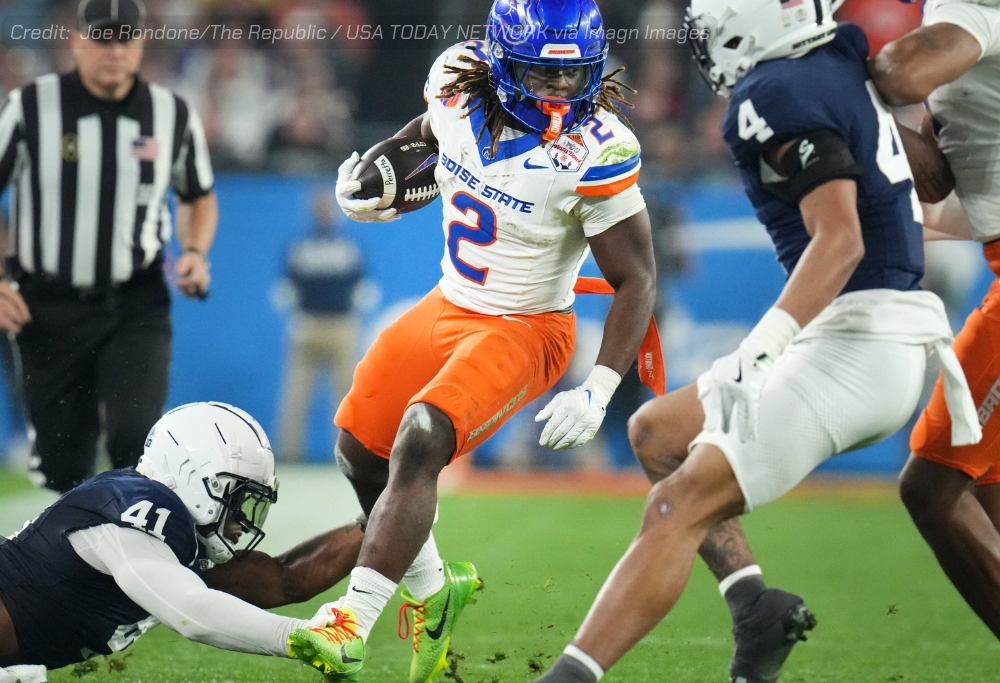
Boise State star Ashton Jeanty has stolen the spotlight and fell just short of breaking the all-time legend Barry Sanders, single season rushing record. There is no doubt Jeanty will be a top 10 pick, and his draft stock depends on how valuable his impact will be on the football field. He will instantly transform an offense similar to the impact of Bijan Robinson two years ago and is one of the most highly touted running back prospects of the 21st century.
Omarion Hampton is another name to keep an eye on, but the running back class for the 2025 NFL draft lacks the difference makers outside of Jeanty. There is no doubt many of these top names will be selected on day one, but there is a good chance Jeanty will be the only running back selected in the first round of the 2025 NFL draft.
1.Ashton Jeanty- Boise State
Strengths
- Built like a tank
- Low frame allows for rapid direction changes
- Good pass catching ability
- Excellent field vision
Weaknesses
- Limited frame becomes pass blocking liability
- Can try and do too much downfield
NFL Fit
- Dallas Cowboys
- Denver Broncos
2.Omarion Hampton- North Carolina
Strengths
- Incredible athleticism
- Frame needed to become dominant
- Explosive in open space
Weaknesses
- Jumpy on delayed run handoffs
- Lacks the patience for blockers to get downfield
NFL Fit
- Dallas Cowboys
- Las Vegas Raiders
3.Kaleb Johnson- Iowa
Strengths
- Speed is surprising with his size
- Knack for finding gaps
- Elite stiff arm
Weaknesses
- Impatient with blocking schemes
- Lack of big game experience
- Poor hands for pass catching plays
NFL Fit
- Las Vegas Raiders
- Pittsburgh Steelers
4.Dylan Sampson- Tennessee
Strengths
- Lightning speed
- Forces missed tackles
- Agility
Weaknesses
- Poor protection
- Limited options when he’s on the field
NFL Fit
- Denver Broncos
- New York Giants
5.Quishon Judkins- Ohio State
Strengths
- Good instincts
- Speed and physicality
- Three down running back potential
Weaknesses
- Lacks straight line speed down the field
- Injury concerns
NFL Fit
- New York Giants
- Cincinnati Bengals
6.TreVon Henderson- Ohio State
Strengths
- Speed
- Elusive in the open field
- Positive trend in pass catching
Weaknesses
- Impatient at the goal line
- Injury concerns
- Small
NFL Fit
- Dallas Cowboys
- Las Vegas Raiders
7.Cameron Skattebo- Arizona State
Strengths
- Physical as a runner and blocker
- Stunning mentality
- Ability to bounce off tackles
Weaknesses
- Lacks the straight line speed
- Poor direction changes
NFL Fit
- Los Angeles Chargers
- Chicago Bears
8.Nicholas Singleton- Penn State
Strengths
- Acceleration through gaps
- Lowers shoulder through contact
- Versatile for the playbook
Weaknesses
- Not a primary running back
- Effort
- Pass protection
- Lack of creativity in the open field
NFL Fit
- Dallas Cowboys
- New York Giants
9.Damien Martinez- Miami
Strengths
- Big frame
- Physical in the open field
- Can run through contact
- Agile footwork
Weaknesses
- Pass catching
- Speed in jet sweeps
NFL Fit
- Denver Broncos
- Chicago Bears
10.Jordan James- Oregon
Strengths
- Strength for his size
- Acceleration
- Patience in run blocking schemes
Weaknesses
- Straight line speed
- Pass protection
NFL Fit
- Cleveland Browns
- Kansas City Chiefs
Factors NFL Teams Consider When Drafting Running Backs
The running back position has been highly scrutinized, and teams have been hesitant to use early round draft picks in the backfield. In the modern-day NFL, an elite running back must be able to do three things; pass protection, pass catching, and run the football. If any of these three components are missing, it is difficult for teams to justify using valuable draft capital at the running back position.
Pass Protection:
One of the most important factors for drafting a running back is the ability to protect the quarterback on passing plays. Defenses can cheat by loading up the tackle box if they see an opposing running back on the field that lacks pass protection abilities. Running backs aren’t usually tasked with one-on-one coverage against towering defensive linemen, but they have to be able to chip away and slow down the league’s biggest pass rushers. If they can eliminate a blitzing linebacker or safety, they can create opportunities for their teammates down the field. Otherwise, they are simply a pylon once the quarterback has the ball in his hands.
Pass Catching:
Despite the term ‘running back’ being coined for players in the backfield, teams have been using their running backs as pass catchers more frequently in recent seasons. The ability to give the quarterback a safe option for a short gain is crucial as pass rushers become better and better at what they do. Turning a sack into a short gain can be a huge difference maker in the NFL, and the top running back prospects need this aspect of their game developed if they hope to make an NFL roster.
Running the Football:
Of course, the most important aspect teams consider when deciding on their running back selection is the ability to run the football. Ball security has ended elite running backs careers early, and you will be hard-pressed to find an NFL coach who doesn’t prioritize taking care of the football. Most of the elite running backs can split seams and find gaps up the middle, meaning their draft stock often hinges on the rest of their game.

 Share on